
Introduction
Buying land is one of the most rewarding investments you can make in Nigeria. Whether you’re planning to build a family home in Abuja, acquire farmland outside Ibadan, invest in developing areas like Ibeju-Lekki, or purchase commercial land in Port Harcourt, the right piece of land can appreciate significantly over time.
Unfortunately, land is also one of the easiest assets to misrepresent.
Stories of forged documents, multiple sales of the same plot, fake estate layouts, and family disputes have made many Nigerians cautious about buying land. These concerns are understandable. Land transactions often involve significant amounts of money, and mistakes can be difficult—and sometimes impossible—to reverse.
The good news is that most land-related problems don’t happen because buyers are unlucky. They happen because important verification steps were skipped or rushed.
Verifying land is more than checking whether a seller has a file full of documents. It is a structured investigation into the land itself, the person selling it, its legal history, and any risks that could affect your ownership or ability to develop it in the future.
This guide walks you through that process step by step. Whether you’re buying your first plot, expanding your investment portfolio, or purchasing remotely from the diaspora, you’ll learn how to evaluate land with greater confidence before making any payment.
Town.ng Expert Tip
A genuine seller should have no objection to reasonable verification. If someone pressures you to pay before carrying out basic checks, treat it as a signal to slow the transaction—not speed it up.
Why Land Verification Matters in Nigeria
Land ownership carries legal, financial, and emotional significance. For many people, buying land represents years of savings or the foundation of a future home or business.
Because of its value, land is also the subject of disputes that may involve families, communities, companies, government agencies, or competing buyers.
Verification helps answer one critical question:
“If I pay for this land today, will I be able to enjoy and legally transfer my rights tomorrow?”
That question goes beyond whether the land physically exists. It requires understanding ownership, documentation, location, legal restrictions, and the property’s history.
A proper verification process can help uncover issues such as:
- ownership disputes;
- forged title documents;
- overlapping land claims;
- government acquisition;
- boundary inconsistencies;
- multiple sales;
- unresolved inheritance matters;
- planning restrictions.
While no process can eliminate every possible risk, verification dramatically improves your ability to make informed decisions.
The Cost of Skipping Verification
Some buyers hesitate to spend money on legal advice, surveys, or document searches because they see these as unnecessary expenses.
In reality, verification is often one of the least expensive parts of a property transaction—and one of the most valuable.
Failing to verify land before payment can lead to:
- lengthy legal disputes;
- inability to register ownership;
- delays in obtaining development approvals;
- demolition of unauthorized structures;
- loss of purchase funds;
- reduced resale value;
- expensive litigation;
- emotional stress and uncertainty.
The goal isn’t to make buying land complicated. It’s to reduce avoidable risks before they become expensive problems.
What Does It Mean to Verify Land?
Land verification is the process of confirming that a parcel of land can be purchased with reasonable confidence based on evidence rather than assumptions.
It combines several forms of investigation, including:
- verifying the seller’s identity and authority;
- confirming the location and boundaries of the land;
- reviewing title documents;
- checking government records;
- assessing the chain of ownership;
- identifying restrictions or disputes;
- evaluating whether the land is suitable for your intended purpose.
Many first-time buyers assume that seeing a Survey Plan or Certificate of Occupancy is enough. In practice, those documents are only one part of the picture.
For example:
- A survey plan may accurately identify the land but not prove the seller owns it.
- A genuine title document may relate to a different parcel than the one you’re shown.
- A legitimate owner may still be unable to transfer ownership if there are unresolved legal issues affecting the land.
Verification brings these different pieces together to form a clearer picture of the transaction.
Land Verification vs. Land Due Diligence
These terms are closely related but not identical.
| Land Verification | Land Due Diligence |
|---|---|
| Focuses on confirming ownership and authenticity | Takes a broader view of the transaction |
| Examines title documents | Includes legal, technical, financial, and planning considerations |
| Verifies survey details | Evaluates development suitability |
| Confirms seller’s authority | Assesses risks beyond ownership |
| Searches government records | May include environmental and infrastructure assessments |
Think of land verification as a core part of the wider due diligence process.
Common Types of Land Fraud in Nigeria
Understanding how land fraud occurs can help you recognize warning signs before they become costly mistakes.
While fraud methods evolve over time, certain patterns appear repeatedly across different parts of the country.
Multiple Sales of the Same Land
One of the most common forms of land fraud involves selling the same parcel to more than one buyer.
This may happen intentionally or because ownership is disputed among family members or community representatives.
In rapidly developing areas where land values are rising quickly, pressure to secure a plot can lead buyers to skip verification.
A Land Registry search and careful review of ownership records can help reduce this risk.
Forged Land Documents
Fraudsters sometimes produce convincing copies of:
- Survey Plans;
- Certificates of Occupancy;
- Deeds of Assignment;
- Allocation Letters;
- receipts;
- powers of attorney.
Because many forged documents closely resemble genuine ones, visual inspection alone is rarely sufficient.
Verification should involve the appropriate government records and professional review.
Selling Land Without Authority
Not everyone marketing land has the legal right to sell it.
Examples include:
- an individual attempting to sell family land without the necessary consent;
- an agent acting without authorization;
- a company representative exceeding their authority;
- someone posing as the owner.
The question isn’t simply, “Who is selling the land?” It’s also, “Can this person legally transfer ownership?”
Government Acquisition Issues
Some land falls within areas reserved for roads, public infrastructure, conservation projects, or other government purposes.
Buying such land without understanding its status can create significant challenges when you attempt to develop or register it.
We’ll discuss how to investigate government acquisition in detail later in this guide.
Boundary Manipulation
In some cases, buyers are shown one parcel of land but later discover that the documents correspond to another location.
This highlights why physical inspection and survey verification should always be carried out together.
Fake Estate Developments
Marketing brochures, 3D renderings, and social media advertisements can make undeveloped land appear more advanced than it actually is.
While many developers legitimately market future projects, buyers should distinguish between approved development plans and promotional concepts.
Visiting the site helps confirm what currently exists on the ground.
Town.ng Warning
If a seller discourages you from visiting the land because “everything can be handled online,” insist on an independent inspection or appoint a trusted representative to inspect it on your behalf.
The Land Verification Mindset: Think Like an Investigator
One of the biggest mistakes buyers make is assuming verification is about collecting documents.
Experienced investors approach it differently.
They treat each property purchase as an investigation.
Instead of asking:
“What documents does the seller have?”
They ask:
- Who owns this land?
- How do we know they own it?
- Can they legally sell it?
- Does every document support the same story?
- Do government records agree?
- Does the physical land match the documents?
- Are there any unresolved risks?
Every answer should be supported by evidence—not assumptions.
This mindset helps you identify inconsistencies that might otherwise go unnoticed.
For example, if the survey plan, title document, and physical inspection all point to the same parcel of land, that’s encouraging. If they tell different stories, it’s a sign to investigate further before proceeding.
Step 1: Verify the Seller Before You Verify the Land
Before reviewing a single document, confirm that you’re dealing with the right person.
A legitimate parcel of land can still become the subject of a problematic transaction if the seller lacks authority to dispose of it.
Start by confirming:
- the seller’s full legal name;
- a valid government-issued means of identification;
- contact details;
- whether the name matches the ownership documents;
- the basis of their ownership.
If someone claims to be acting for the owner, request documentary evidence of that authority and have it reviewed by your solicitor.
For corporate sellers, confirm the company’s registration and ensure the individual representing the company has authority to execute the transaction.
Family-owned land requires additional care. Ask who owns the land, whether it has been inherited, and whether all necessary family representatives have consented to the sale.
Town.ng Expert Tip
Never rely solely on introductions such as “He’s a trusted family friend” or “Everyone in the community knows him.” Trust should complement verification—not replace it.
Step 2: Visit the Land and Carry Out a Physical Inspection
No matter how convincing the documents appear, make time to inspect the land before paying.
A physical inspection allows you to compare what you’re being told with what actually exists.
During your visit, pay attention to:
Location
Confirm that the land is where the seller says it is.
Compare nearby roads, landmarks, and neighboring properties with the survey plan.
Boundaries
Ask the seller or surveyor to identify the property’s boundary points.
Where possible, compare these with the survey plan to ensure consistency.
Current Occupation
Determine whether the land is:
- vacant;
- fenced;
- cultivated;
- under construction;
- occupied by tenants;
- occupied by another family or community.
Visible occupation doesn’t necessarily prevent a sale, but it raises questions that should be answered before payment.
Access
Can the land be reached through an established road?
If access depends on crossing another person’s land, clarify the legal basis for that access before proceeding.
Neighbourhood Enquiries
Neighbours often know the recent history of a property.
Without relying solely on informal information, you may learn about:
- previous ownership disputes;
- flooding;
- road expansion plans;
- recurring community issues;
- prior sales attempts.
These conversations should support—not replace—official verification.
Step 3: Engage Independent Professionals
After inspecting the land, the next step is not to ask the seller whether everything is genuine. It is to bring in professionals whose duty is to protect your interests.
At a minimum, most land purchases should involve:
- a property lawyer;
- a registered surveyor.
Depending on the size, location, value, and intended use of the land, you may also need an estate surveyor and valuer, town planner, architect, engineer, or environmental consultant.
The key word is independent.
The lawyer introduced by the seller may be competent, but that person may also represent the seller. The surveyor who prepared the seller’s plan may know the land, but you still need someone who is accountable to you.
What the Property Lawyer Should Do
A competent property lawyer may:
- review the seller’s title documents;
- investigate the ownership history;
- conduct or supervise searches at the relevant Land Registry;
- identify mortgages, restrictions, court cases, or competing interests;
- confirm whether the seller has authority to sell;
- review the contract of sale;
- prepare or review the Deed of Assignment;
- advise on consent, stamping, registration, and title perfection;
- document payment and completion properly.
A lawyer does not replace a surveyor. Legal documents may describe a parcel of land, but a surveyor helps establish where that parcel is physically located.
What the Surveyor Should Do
A registered surveyor may:
- inspect the land;
- locate or re-establish its boundaries;
- take coordinates;
- compare the physical parcel with the survey plan;
- identify overlaps or inconsistencies;
- investigate whether the location appears affected by an acquisition or scheme;
- prepare a new survey plan where appropriate;
- assist with charting or submitting the survey for official verification.
Town.ng Recommendation
Hire professionals before you negotiate final payment terms. Bringing them in after paying substantially reduces your bargaining power if they uncover a serious defect.
Do Not Confuse Professional Roles
| Professional | Main responsibility |
|---|---|
| Property lawyer | Legal ownership, title history, transaction documents and registration |
| Registered surveyor | Location, dimensions, coordinates, boundaries and survey status |
| Estate surveyor and valuer | Market value, property advice and investment assessment |
| Town planner | Permitted land use, planning schemes and development considerations |
| Engineer or architect | Suitability for construction and proposed development |
For a straightforward residential plot, you may not need every professional listed above. For a large development site in Lagos, Abuja, Port Harcourt, Uyo or another rapidly developing market, limiting due diligence to one professional can leave important questions unanswered.
Step 4: Collect Every Available Land Document
The seller should provide clear copies of all documents supporting the claimed ownership.
Do not ask only for “the title.” Ask for the complete document history.
Possible documents include:
- Survey Plan;
- Certificate of Occupancy;
- Governor’s Consent;
- Deed of Assignment;
- Deed of Conveyance;
- Deed of Gift;
- probate documents or letters of administration;
- government allocation letter;
- customary allocation evidence;
- excision or gazette details;
- purchase receipts;
- previous agreements;
- power of attorney;
- court judgment, where ownership arose from litigation;
- evidence of registration;
- building or planning approvals where relevant.
Not every land transaction will have all these documents. The appropriate documents depend on how the seller acquired the land and what interest is being transferred.
Ask the Seller to Explain the Ownership Story
A useful exercise is to ask the seller:
- Who originally owned this land?
- How did you acquire it?
- When did you acquire it?
- What document transferred it to you?
- Was that transfer registered or perfected?
- Has the land ever been mortgaged, leased, disputed or sold?
- Is anyone else entitled to approve this sale?
- Has any part of the original land been sold previously?
The answers should match the paperwork.
Suppose a seller says that the land was inherited from a late parent. A recent Deed of Assignment signed by an unrelated third party does not automatically support that story. The lawyer must investigate the gap.
Likewise, if a company is selling land, the title should be traced to the company or to a party legally capable of transferring the interest to it. Corporate registration proves that a company exists; it does not prove that the company owns a particular parcel.
Town.ng Warning
A pile of documents is not the same as a good title. Ten inconsistent documents may be less useful than three authentic documents that establish a clear ownership chain.
Step 5: Verify the Survey Plan
A Survey Plan identifies the land technically. It usually shows its dimensions, shape, coordinates, beacon numbers, location, area and survey particulars.
It is one of the most important documents in land verification, but it is widely misunderstood.
What a Survey Plan Can Tell You
A proper survey plan can help you establish:
- where the land is located;
- its approximate size and shape;
- the boundary coordinates;
- the relationship between its beacons;
- the surveyor associated with the plan;
- the plan number and date;
- whether the parcel shown corresponds with the land inspected.
What a Survey Plan Does Not Prove
A survey plan does not, by itself, prove ownership.
A person can obtain a survey of land they do not legally own. A fraudulent seller may also present a genuine survey that belongs to another parcel.
Think of the survey plan as the land’s technical identity—not its complete ownership record.
Details to Check on the Survey Plan
Your surveyor should examine:
- the survey plan number;
- name of the person for whom it was prepared;
- property location;
- plot description;
- beacon numbers;
- coordinates;
- dimensions;
- total area;
- scale;
- north point;
- date;
- surveyor’s name, signature and seal;
- registration details of the surveyor;
- relevant government references or lodgement information, where applicable.
The names on the survey and title documents do not always need to be identical. A survey may have been prepared for an earlier owner. What matters is whether the legal chain explains how the interest moved from that person to the current seller.
Match the Survey to the Ground
Your surveyor should take readings on the site and compare them with the submitted plan.
This helps answer questions such as:
- Are you being shown the same land described in the plan?
- Does the size on the ground match the stated area?
- Are the boundary points identifiable?
- Does the parcel overlap a road, neighbouring plot or another surveyed parcel?
- Has the seller moved the beacons?
- Is the land situated inside a different layout from the one advertised?
A common fraud pattern is to show a buyer an attractive parcel close to a major road while presenting documents for land farther inside the community.
Never verify the document without confirming the physical parcel.
Verify Through the Appropriate Survey Authority
The method of survey verification varies by state.
In Lagos, for example, the Office of the Surveyor-General operates official survey-related systems, including an online plan-number validation facility. Lagos also offers a Land Information Certificate process that indicates whether land is free from state government acquisition. These tools are useful, but buyers still need professional interpretation of the result.
Other states may require a manual application, charting request, search, site coordinates or submission through a registered surveyor. Do not assume that the Lagos process applies in Ogun, Oyo, Rivers, Edo, Enugu, Akwa Ibom, Kano or the Federal Capital Territory.
Town.ng Expert Tip
Ask for the written output of the survey investigation. “The surveyor said it is fine” is difficult to rely on if a dispute arises later.
Red Flags on a Survey Plan
Pause the transaction if:
- the plan number cannot be traced;
- coordinates lead to a different location;
- the land area differs materially from what was advertised;
- the seller refuses access for an independent survey;
- beacons are missing or have recently been moved;
- the plan appears altered;
- the seller’s explanation of ownership does not connect with the name on the plan;
- the surveyor who allegedly prepared it cannot be verified;
- government charting produces an unclear or adverse result.
Some of these issues can be corrected. They should never be ignored.
Step 6: Establish the Land’s Government Status
One of the most serious mistakes a buyer can make is to assume that every undeveloped parcel is available for private sale.
Land may be affected by:
- government acquisition;
- an existing government scheme;
- road alignment;
- drainage reservation;
- pipeline or utility corridor;
- committed public use;
- coastal, environmental or planning restrictions;
- revocation or other public-interest measures.
Under the Land Use Act, land in each state is generally vested in the governor to be held in trust and administered for the common benefit of Nigerians. Urban land is placed under the control and management of the governor, while other land is generally managed by the relevant local government, subject to the Act. The Act also allows rights of occupancy to be revoked for overriding public interest.
That legal framework is one reason government-status checks are essential.
What Is Government Acquisition?
In everyday Nigerian property conversations, “government acquisition” usually refers to land that government has acquired, reserved or designated for a public purpose or scheme.
However, acquisition questions are often more complicated than the phrase suggests.
Your surveyor and lawyer may need to determine:
- whether the parcel falls inside an acquisition;
- whether that acquisition remains committed to a public purpose;
- whether any portion was released;
- whether a regularisation route exists;
- whether the seller’s claimed title predates or survives the relevant government action;
- whether the land sits within a published scheme or layout.
Do not rely on a seller’s statement that the land is “free from acquisition.” Obtain an official or professionally documented result.
Why Government Status Matters
If the land is adversely affected, you may encounter difficulties with:
- title registration;
- Governor’s Consent;
- building approval;
- financing;
- lawful development;
- resale;
- compensation expectations;
- possession.
In serious cases, the buyer may pay for land that cannot be used for the intended project.
Committed Acquisition and Other Acquisition Categories
Terms used by agents and practitioners can differ across states. In Lagos property discussions, buyers often hear expressions such as:
- committed acquisition;
- general acquisition;
- excision;
- gazette;
- regularisation;
- ratification;
- deemed grant.
These expressions should not be treated as universal shortcuts.
A parcel’s status must be established from the relevant government records and interpreted in the context of the transaction. For example, Lagos State’s current Lands Multipurpose Desk distinguishes services such as state and federal land regularisation, deemed grants for qualifying community or family land, and Land Information Certificates. The availability of an application route does not mean every parcel is eligible or that approval is guaranteed.
Town.ng Warning
“It is under acquisition, but everybody is building there” is not legal clearance. Existing buildings do not prove that the occupants have valid title or planning approval.
Step 7: Understand Excision and Gazette Claims
Excision and gazette are among the most frequently misused terms in Nigerian land marketing.
They are particularly common in Lagos and neighbouring investment corridors, where buyers may see advertisements claiming:
- “excision in progress”;
- “gazette title”;
- “covered by excision”;
- “excision file number available.”
These statements require careful verification.
What Is an Excision?
In practical terms, an excision generally refers to a government decision to release or carve out an identified portion of land from a larger area affected by acquisition, often in favour of a recognised community or family.
The important point is that the release must relate to a clearly defined area.
A family may have obtained excision over 20 hectares while claiming ownership of 100 hectares. A buyer purchasing outside the released portion cannot safely rely on the excision merely because the land belongs to the same community.
What Is a Gazette?
A gazette is an official government publication used to announce legal notices, decisions and other public information.
Where an excision is published in a gazette, the relevant details may include:
- the community or beneficiary;
- the location;
- the area released;
- survey descriptions;
- coordinates or boundaries;
- the date or notice reference.
The existence of a gazette is not enough. Your surveyor must confirm that the particular plot being sold falls inside the released area.
“Excision in Progress” Is Not a Completed Title
An application for excision may be pending, rejected, modified or unresolved.
Until a final decision is issued, a buyer should not treat the expected outcome as guaranteed.
The right questions are:
- Was an application actually submitted?
- What land does it cover?
- What is its official reference?
- What is its present status?
- Has any approval been issued?
- Does the parcel fall within the approved coordinates?
- What happens to the buyer if the application fails?
Town.ng Recommendation
Price land according to its present verified status—not the title a marketer promises it may obtain later.
How to Verify an Excision or Gazette Claim
Your lawyer and surveyor should work together to:
- obtain the relevant government publication or approval record;
- verify the beneficiary’s name;
- confirm the area and location released;
- extract or review the referenced survey details;
- chart the plot’s coordinates;
- confirm that the land falls wholly within the released portion;
- investigate any subsequent acquisition, layout, revocation, transfer or dispute.
Do not depend on a cropped gazette page circulating on WhatsApp. It may be genuine but unrelated to the land being marketed.
Step 8: Verify the Certificate of Occupancy
A Certificate of Occupancy, commonly called a C of O, is evidence of a right of occupancy issued under the Land Use Act.
Section 9 of the Act permits the governor to issue a Certificate of Occupancy as evidence of a statutory right of occupancy in the circumstances set out in the legislation.
A C of O is an important title document, but buyers often give it more power than it actually has.
A C of O Does Not End the Investigation
A property advertised as “C of O land” can still present problems if:
- the certificate is forged;
- it relates to another parcel;
- the seller is not the named holder or lawful successor;
- the land has been transferred without proper documentation;
- there is an undisclosed mortgage;
- the title has been revoked;
- the certificate covers a larger parcel and the seller cannot validly transfer the portion offered;
- the term or conditions require investigation;
- the land is involved in litigation.
The correct question is not simply, “Does the seller have a C of O?”
Ask instead:
“Is this certificate authentic, does it cover this exact land, and how did the seller obtain the right to transfer it to me?”
Details to Verify on a C of O
Your lawyer should compare:
- the certificate number;
- file or registration references;
- holder’s name;
- date of grant;
- commencement and term;
- land use or purpose;
- plot number;
- location;
- survey plan number;
- area;
- conditions of grant;
- endorsements;
- rent or other obligations;
- registry entries.
These details must also align with the Survey Plan, physical inspection and seller’s ownership history.
Verify the C of O at the Relevant Registry
The title should be searched through the land administration authority responsible for the state or territory where the land is located.
The search should seek to confirm:
- whether the document exists in official records;
- the registered holder;
- whether the details match the copy presented;
- whether subsequent dealings have been registered;
- whether a mortgage, charge, restriction or other interest appears;
- whether there is any adverse entry affecting the title.
Do not assume that a certificate issued in one owner’s name automatically authorises a later owner to sell. Each transfer in the chain should be reviewed.
Step 9: Verify the Deed of Assignment and Ownership Chain
A Deed of Assignment documents a transfer of an interest in land from an assignor to an assignee.
In many private land transactions, it is the principal document linking one owner to the next.
What to Check in a Deed of Assignment
Your lawyer should examine:
- the parties’ full names and descriptions;
- the capacity in which each party acted;
- the history or recitals explaining ownership;
- the consideration or purchase value;
- the land description;
- survey plan attached or referenced;
- covenants and warranties;
- execution by the parties;
- witness details;
- dates;
- consent and registration endorsements;
- evidence of stamping;
- consistency with previous documents.
Trace the Chain, Not Just the Latest Deed
Consider this simplified example:
- A family originally owned the land.
- The family sold it to Buyer A.
- Buyer A transferred it to Company B.
- Company B now wants to sell it to you.
You should not inspect only Company B’s latest deed.
The investigation should establish:
- the family’s basis of ownership;
- whether the appropriate family representatives sold the land;
- whether Buyer A obtained a valid transfer;
- whether Buyer A validly transferred the same land to Company B;
- whether Company B is authorised to sell;
- whether the physical parcel matches every stage of the documentation.
A break anywhere in that chain can affect the transaction.
Governor’s Consent and Subsequent Transfers
The Land Use Act restricts the alienation of a statutory right of occupancy by assignment, mortgage, transfer of possession, sublease or otherwise without the governor’s prior consent, subject to the provisions and exceptions in the Act. It also addresses approval requirements for dealings in customary rights of occupancy.
In everyday practice, the document evidencing approval for a transfer of an existing interest is commonly referred to as Governor’s Consent.
A C of O and Governor’s Consent are therefore not interchangeable:
| Certificate of Occupancy | Governor’s Consent |
|---|---|
| Evidences a right of occupancy granted or recognised in the relevant circumstances | Relates to approval of a subsequent transfer or dealing |
| Usually associated with the original recognised holder or grant | Commonly arises when that holder transfers an interest |
| Must be matched to the land and holder | Must be matched to the deed and transaction it approves |
The exact perfection requirements and procedures vary by jurisdiction and transaction. Your lawyer should confirm the current process in the relevant state.
Town.ng Expert Tip
A receipt proves that money may have changed hands. It does not, on its own, establish a complete legal transfer of land.

Step 10: Search the Land Registry and Other Relevant Records
Document review should be supported by independent searches.
The most obvious search is at the relevant State Land Registry or land administration authority. Depending on the property, additional searches may be appropriate.
What a Land Registry Search May Reveal
A search may help confirm:
- the registered title holder;
- title or file references;
- prior transfers;
- registered mortgages or charges;
- restrictions;
- cautions or encumbrances;
- registration status of a deed;
- inconsistencies in the seller’s documents.
The available information and search procedure differ between jurisdictions. Lagos State, for example, lists Land Registry, survey, regularisation, legal and Land Use and Allocation functions within its land administration structure.
Other Searches That May Be Necessary
Depending on the transaction, your lawyer may consider:
- court or litigation searches;
- probate registry searches;
- Corporate Affairs Commission checks;
- planning authority enquiries;
- development-control searches;
- local government enquiries;
- community and traditional ownership investigations;
- searches relating to mortgages or secured interests;
- checks with the developer or estate management company.
No single search answers every question.
A clean registry result is valuable, but it does not replace physical inspection, survey work or family-title investigation where customary ownership is involved.
Step 11: Verify Family or Community Land Carefully
Family land is not automatically fraudulent. A significant amount of land in Nigeria traces back to family or community ownership.
The risk arises when the wrong people attempt to sell it, beneficiaries disagree, or the land has already been allocated to someone else.
Questions to Ask About Family Land
Your lawyer should investigate:
- Which family owns the land?
- How did the family acquire it?
- Is ownership disputed?
- Who is the recognised family head?
- Who are the principal members or authorised representatives?
- Has the land been partitioned?
- Is probate or inheritance documentation required?
- Has the family previously sold the parcel?
- Is there a family resolution or authority supporting the transaction?
- Are minors, estates of deceased persons or absent beneficiaries involved?
The legal requirements depend on the facts and applicable customary law. Avoid using a generic rule for every family transaction.
Do Not Pay One Relative Quietly
A common problem occurs when one family member claims to have been “given” a portion and sells it without the knowledge of those whose consent or participation may be required.
The buyer later meets other family members who reject the transaction.
Warning signs include:
- meetings held secretly;
- refusal to introduce recognised family representatives;
- conflicting family names;
- multiple receipts issued by different people;
- demands for repeated “settlement” payments;
- inability to explain how the seller’s portion was allocated;
- previous buyers occupying the same parcel.
Meet the Relevant Parties
Your lawyer should identify the persons whose participation is legally necessary and arrange proper execution of the transaction documents.
This is not a matter of gathering a large crowd for photographs. It is about confirming authority.
Town.ng Warning
Community recognition is useful evidence, but applause at a family meeting does not cure a defective title. The legal authority of the people signing must still be established.
The Document Consistency Test
By this stage, every source should tell substantially the same story.
| Source | What it should confirm |
|---|---|
| Seller’s identity | The person or entity entitled to transact |
| Physical inspection | The actual parcel, boundaries, use and occupation |
| Survey Plan | The land’s technical identity |
| Government-status check | Acquisition, scheme or restriction position |
| Title documents | Basis and chain of ownership |
| Registry search | Officially recorded interests |
| Family or community enquiry | Customary history and authority |
| Contract documents | The exact interest, price and obligations being transferred |
Where two sources conflict, do not choose the explanation you prefer. Investigate until the inconsistency is resolved.
A genuine transaction should be capable of surviving questions.
A risky transaction usually depends on the buyer stopping the investigation too early.
Step 12: Review the Contract of Sale Before Paying
By this point, you should have gathered substantial information about the land, the seller, and the supporting documents. However, one critical question remains:
What exactly are you agreeing to buy?
This is where the Contract of Sale becomes important.
Many buyers focus on title documents and overlook the sale contract, assuming it is a routine document that can be signed without much attention. In reality, the contract sets out the rights and obligations of both parties before the transaction is completed.
A poorly drafted contract can create disputes even where the land itself has a good title.
What Is a Contract of Sale?
A Contract of Sale is the agreement that records the terms under which the seller agrees to transfer an interest in the land to the buyer.
It typically addresses matters such as:
- the identity of the buyer and seller;
- the agreed purchase price;
- payment schedule;
- description of the land;
- documents to be delivered;
- completion date;
- conditions that must be satisfied before completion;
- default provisions;
- dispute resolution mechanisms.
The Contract of Sale is different from the Deed of Assignment. The contract governs the agreement to sell, while the Deed of Assignment is generally used to transfer the legal interest upon completion.
Questions Your Lawyer Should Ask
Before signing, your lawyer should confirm:
- Does the land description match the Survey Plan?
- Does the seller have the legal capacity described in the contract?
- Are all promised documents listed?
- Are completion timelines realistic?
- What happens if verification reveals problems?
- Can the buyer recover their money if the seller cannot complete the transaction?
- Are there hidden obligations or additional charges?
Every clause should be understood before signatures are added.
Town.ng Expert Tip
Never assume that a standard contract automatically protects your interests. Property transactions differ, and contracts should reflect the specific circumstances of the land being purchased.
Step 13: Make Payments Safely
Verification should continue until payment is completed—not stop once documents appear satisfactory.
Unfortunately, payment fraud is increasingly common in property transactions.
Examples include:
- paying into the wrong account;
- paying someone without authority;
- making cash payments without proper documentation;
- transferring money before agreed verification is completed;
- paying based only on verbal assurances.
Best Practices for Property Payments
Where appropriate:
- Ensure the recipient is correctly identified.
- Keep documentary evidence of every payment.
- Obtain properly executed receipts.
- Ensure payment milestones align with the contract.
- Avoid making large cash payments where traceable alternatives are available.
- Confirm that the person receiving funds is authorized to do so.
Large transactions should always be documented carefully.
Avoid Pressure Tactics
One of the most common warning signs is artificial urgency.
Statements such as:
“Another buyer is coming this afternoon.”
“Prices will double tomorrow.”
“Just pay today—we’ll sort the documents later.”
should never replace proper due diligence.
Legitimate opportunities can require timely decisions, but urgency should not prevent reasonable verification.
Step 14: Understand Completion Documents
Buying land involves more than making payment.
Completion usually requires documentation confirming that ownership has been transferred according to the agreed terms.
Depending on the transaction, completion documentation may include:
- Deed of Assignment;
- original title documents;
- Survey Plan;
- purchase receipt;
- possession documents;
- consent documents (where applicable);
- evidence of payment;
- completion letter.
Your lawyer should confirm that all agreed documents have been received before the transaction is considered complete.
Buying Land From an Estate Developer
Many buyers assume that purchasing land within an estate removes the need for verification.
Although reputable developers often implement structured sales processes, buyers should still conduct appropriate due diligence.
Consider confirming:
- the developer’s legal identity;
- Corporate Affairs Commission registration;
- ownership of the land being developed;
- planning approvals where applicable;
- infrastructure commitments;
- title documentation;
- allocation process;
- payment terms.
If purchasing within a developing estate, ask:
- What infrastructure already exists?
- What is still proposed?
- What timelines have been communicated?
- Which promises form part of the contract?
Marketing brochures should not replace legally binding documentation.
Questions to Ask an Estate Developer
Before purchasing estate land, consider asking:
- Who owns the parent title?
- What title document covers the estate?
- Has the land been fully acquired?
- What infrastructure is guaranteed?
- Are service charges applicable?
- What additional fees are payable?
- When will allocation occur?
- What completion documents will I receive?
The answers should be reflected in the transaction documents wherever appropriate.
Buying Land on Instalment
Flexible payment plans have made land ownership more accessible.
However, instalment purchases require additional attention because ownership transfer may occur after payments are completed.
Before committing to an instalment plan, understand:
- total purchase price;
- payment schedule;
- default provisions;
- refund policy;
- allocation timeline;
- title documentation process;
- conditions for transfer.
Ask your lawyer to explain what rights you have during the payment period.
Land Verification for Nigerians in the Diaspora
Remote buyers often face additional challenges.
Distance can make it difficult to inspect land personally or verify information through local enquiries.
To reduce risk:
- appoint an independent property lawyer;
- engage a registered surveyor;
- request current photographs and videos;
- arrange an independent site inspection;
- verify title documents before transferring funds;
- avoid relying solely on social media marketing.
Technology makes communication easier, but it should complement—not replace—professional verification.
Town.ng Recommendation
If you’re buying from outside Nigeria, ensure that every important stage of verification is independently documented. Written reports are easier to review than verbal updates.
Common Mistakes Buyers Make
Even experienced investors occasionally overlook important details.
Some of the most common mistakes include:
Paying Before Completing Verification
Payment should follow verification—not the other way around.
Assuming Every Document Is Genuine
Documents should be authenticated where appropriate.
Professional appearance alone is not proof of authenticity.
Ignoring the Chain of Ownership
Looking only at the latest document may leave important ownership questions unanswered.
Failing to Visit the Land
No amount of online marketing can replace seeing the land—or appointing someone independent to inspect it.
Using Only the Seller’s Professionals
Independent advice provides greater confidence.
Buying Because Others Have Bought Nearby
Neighbouring developments do not automatically confirm the legitimacy of every parcel.
Each transaction deserves its own verification.
Myths vs Facts
| Myth | Fact |
|---|---|
| Every genuine land has a Certificate of Occupancy. | Legitimate ownership may be evidenced through different title documents depending on the property’s history. |
| Estate land never requires verification. | Buyers should still verify ownership, documentation, and approvals. |
| A Survey Plan proves ownership. | A survey identifies land but does not by itself establish legal ownership. |
| A lawyer alone can verify everything. | Lawyers and surveyors perform different but complementary roles. |
| Cheap land is always a bargain. | A low price may justify additional investigation before purchase. |
A Simple Decision Framework
After completing verification, consider placing the transaction into one of three categories.
Proceed
Proceed where:
- ownership appears consistent;
- documents support the transaction;
- professional advice is favourable;
- no significant unresolved risks remain.
Proceed After Conditions Are Met
Continue only after specific issues are resolved.
Examples include:
- correcting documentation;
- obtaining missing approvals;
- clarifying boundaries;
- resolving minor inconsistencies.
Walk Away
Sometimes the safest investment decision is not to invest.
Examples include:
- unresolved ownership disputes;
- forged documentation;
- seller unwilling to cooperate;
- inconsistent title history;
- significant legal uncertainty.
Walking away from a problematic transaction is often less expensive than attempting to resolve years of litigation.
Practical Nigerian Scenarios
Scenario 1: Buying Family Land in Ogun State
A buyer identifies affordable land offered by a member of an extended family.
Before payment, the buyer’s lawyer confirms that additional family representatives are required to participate in the sale. The transaction is delayed until the appropriate parties execute the documents.
Although completion takes longer, the buyer reduces the risk of future ownership disputes.
Scenario 2: Buying Estate Land in Abuja
A professional working in Abuja decides to purchase land within a residential estate.
Instead of relying only on promotional materials, the buyer reviews the estate’s title documents, confirms the developer’s registration, inspects the site, and asks questions about infrastructure delivery.
The verification process provides greater clarity before payment.
Scenario 3: Remote Purchase From Canada
A Nigerian living in Canada intends to purchase investment land in Lagos.
Rather than depending solely on relatives, the buyer appoints an independent lawyer and registered surveyor to verify the property, inspect the land, and review documentation.
The additional professional costs are small compared to the potential financial consequences of purchasing unsuitable land.
Town.ng Expert Tips
Town.ng Expert Tip
Never begin negotiations with the assumption that every seller is dishonest. Instead, assume every important fact should be verified independently.
Town.ng Warning
If a seller discourages you from involving a lawyer or surveyor because “it will delay the process,” consider why independent verification is being discouraged.
Town.ng Recommendation
Keep both digital and physical copies of every document related to your purchase, including payment receipts, correspondence, contracts, surveys, and title documents. Good record-keeping can be invaluable if questions arise later.
Before You Pay: A Final Land Verification Checklist
Use this checklist as a practical reference before making payment.
| Verification Task | Complete |
|---|---|
| Seller’s identity confirmed | ☐ |
| Authority to sell established | ☐ |
| Physical inspection completed | ☐ |
| Boundaries confirmed | ☐ |
| Survey Plan verified | ☐ |
| Government acquisition status investigated | ☐ |
| Excision or Gazette claims verified (if applicable) | ☐ |
| Title documents reviewed | ☐ |
| Chain of ownership established | ☐ |
| Land Registry search completed | ☐ |
| Family ownership investigated (where applicable) | ☐ |
| Contract of Sale reviewed | ☐ |
| Payment process documented | ☐ |
| Independent lawyer consulted | ☐ |
| Registered surveyor consulted | ☐ |
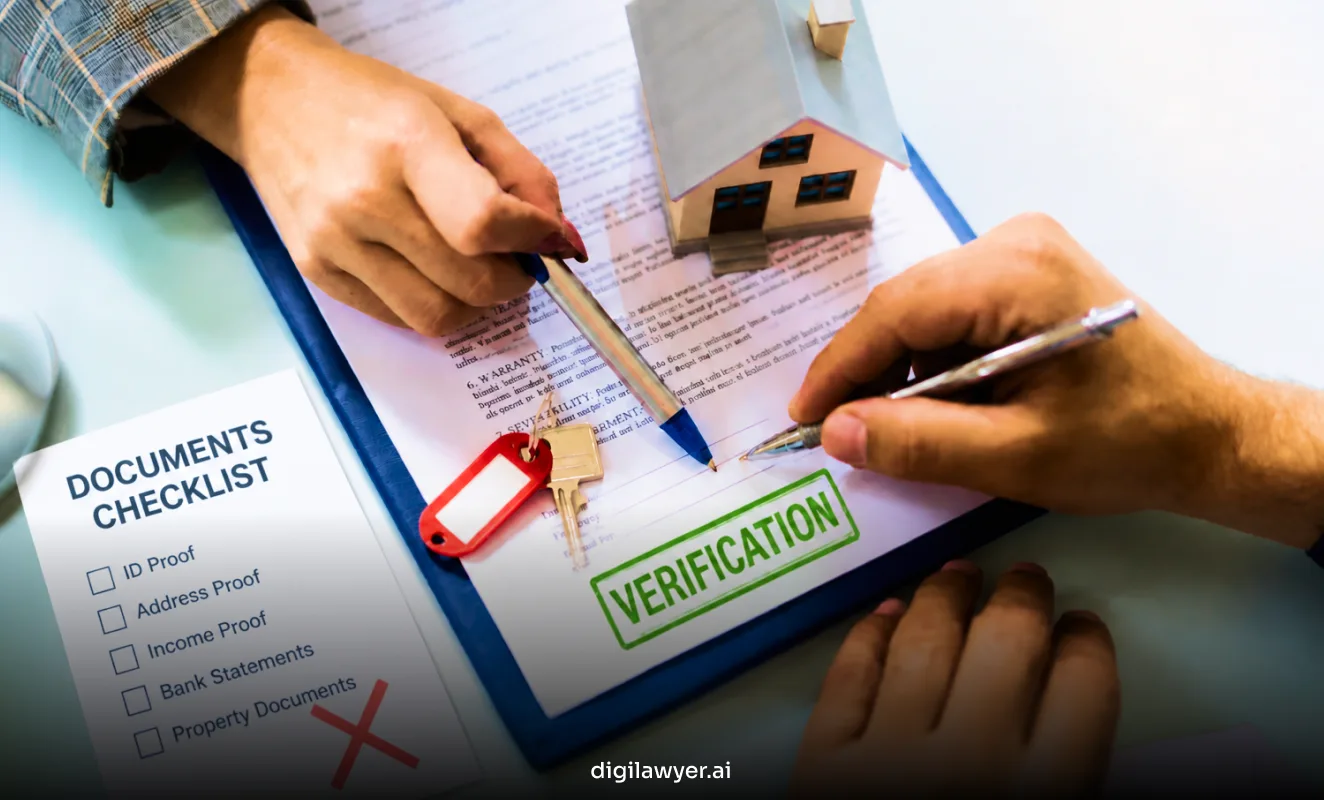
This checklist is not a substitute for professional advice, but it provides a structured framework to help ensure that critical verification steps are not overlooked.
Frequently Asked Questions (FAQs)
1. How do I verify land in Nigeria before paying?
The safest approach is to follow a structured due diligence process. This includes:
- Verifying the seller’s identity and authority to sell.
- Visiting the land for a physical inspection.
- Reviewing the Survey Plan.
- Confirming the land’s government status.
- Verifying title documents.
- Conducting a Land Registry search.
- Investigating the chain of ownership.
- Having all documents reviewed by a qualified property lawyer.
- Engaging a registered surveyor where appropriate.
- Paying only after you’re satisfied with the verification process.
Skipping any of these steps can increase the risk of disputes or financial loss.
2. Can I verify land online in Nigeria?
Some state governments have introduced online services for certain land administration processes, but there is no single nationwide portal that verifies every aspect of land ownership.
Depending on the state, online tools may assist with parts of the verification process, but buyers should still combine them with professional advice, physical inspection, and official searches where applicable.
3. What is the most important document when buying land?
There isn’t a single “most important” document.
A Certificate of Occupancy, Survey Plan, Deed of Assignment, Governor’s Consent, or other title documents each serve different purposes.
The objective is to understand the complete ownership history rather than relying on one document alone.
4. Is a Survey Plan enough to prove ownership?
No.
A Survey Plan identifies the location, dimensions, and boundaries of land. It does not, by itself, prove legal ownership.
Ownership should be supported by appropriate title documents and the property’s chain of title.
5. How do I know if land is under government acquisition?
The process varies by state.
A registered surveyor can assist in checking the land’s status through the relevant government authority using the survey details and coordinates.
Buyers should not rely solely on a seller’s verbal assurances.
6. Can family land be safely purchased?
Yes.
Many legitimate transactions involve family-owned land.
However, buyers should ensure that the individuals selling the land have the legal authority to do so and that any required family approvals have been obtained.
7. What is the difference between excision and a gazette?
In simple terms, an excision refers to government approval releasing a defined portion of land from a larger acquisition, while a gazette is the official publication through which certain government notices—including approved excisions—may be published.
A buyer should verify that the specific plot being purchased falls within the released area.
8. Is a Certificate of Occupancy enough to buy land safely?
No.
A Certificate of Occupancy is an important title document, but buyers should still verify:
- ownership;
- the chain of title;
- the seller’s authority;
- registry records;
- the physical land.
9. How much does land verification cost?
There is no fixed national cost.
The total expense depends on factors such as:
- property location;
- professional fees;
- government search fees;
- survey requirements;
- complexity of the transaction.
Rather than asking, “How much does verification cost?” it is often more useful to ask, “What could inadequate verification cost if something goes wrong?”
10. How long does land verification take?
Timeframes vary depending on:
- the state where the land is located;
- the documents involved;
- the complexity of the ownership history;
- response times from relevant authorities.
Straightforward transactions may progress relatively quickly, while more complex transactions require additional investigation.
11. Can I buy land without a lawyer?
While there is no rule requiring every buyer to engage a lawyer, doing so is generally advisable for most land transactions.
A property lawyer helps identify legal risks that may not be obvious to buyers.
12. Should I use my own surveyor?
Using an independent registered surveyor provides additional confidence because that professional is acting in your interests rather than the seller’s.
13. Can one plot of land be sold to multiple people?
Unfortunately, yes.
This is one of the reasons Land Registry searches, document verification, and professional legal advice are important.
14. Is buying estate land safer than buying community land?
Neither option is automatically safer.
Every transaction should be assessed individually based on documentation, ownership, and due diligence.
15. What happens if I discover problems after paying?
The appropriate response depends on the circumstances.
Some issues can be resolved through further documentation or negotiation.
Others may require legal advice or formal dispute resolution.
The best approach is to reduce the likelihood of these situations through careful verification before payment.
16. Can Nigerians in the diaspora safely buy land?
Yes.
Many Nigerians living abroad successfully purchase land by engaging independent lawyers, registered surveyors, and reputable real estate professionals to verify transactions before funds are transferred.
17. What should I do if the seller refuses verification?
A refusal to allow reasonable verification should be treated as a significant warning sign.
A legitimate seller should generally be willing to cooperate with standard due diligence.
18. Can I rely on WhatsApp documents?
No.
Scanned copies shared through WhatsApp or email may be useful for preliminary review, but important decisions should be based on authenticated documents and official verification where appropriate.
19. How do I avoid land fraud in Nigeria?
The most effective approach combines:
- independent verification;
- professional legal advice;
- survey verification;
- official searches;
- physical inspection;
- careful documentation.
Fraud prevention is usually easier than resolving ownership disputes later.
20. What should I do after successfully verifying land?
Once verification is complete, your lawyer can guide you through the purchase process, execution of the relevant transfer documents, payment, registration requirements, and any title perfection steps that apply to your transaction.
Key Takeaways
Before you commit to buying any land in Nigeria, remember these principles:
- Verify the seller before you verify the documents.
- Never skip a physical inspection.
- Don’t assume a Survey Plan proves ownership.
- Confirm government acquisition status where applicable.
- Review the property’s chain of title—not just the latest document.
- Carry out official searches where appropriate.
- Understand family ownership issues before buying family land.
- Don’t let urgency replace due diligence.
- Work with qualified professionals.
- If something doesn’t add up, investigate further before paying.
Land verification is not about making a transaction more difficult. It’s about making it more secure.
Summary
Buying land in Nigeria can be one of the smartest financial decisions you’ll ever make—but only if you know exactly what you’re buying.
Throughout this guide, we’ve covered every major stage of land verification, from confirming the seller’s identity and inspecting the property to reviewing title documents, verifying survey plans, checking government acquisition status, understanding excision and gazette claims, tracing the chain of ownership, and carrying out Land Registry searches.
We’ve also explored common fraud techniques, explained why family land requires additional care, highlighted mistakes buyers often make, and provided a practical checklist you can use before making payment.
The central lesson is simple:
Never buy land based on promises, assumptions, or attractive prices alone. Buy based on verified facts.
Whether you’re purchasing your first residential plot, investing in future development, or buying remotely from the diaspora, a structured verification process gives you greater confidence that the land you’re paying for is the land you’re actually acquiring.
Conclusion
Every successful land purchase begins with good information.
While no verification process can eliminate every possible risk, it significantly improves your ability to identify problems before they become expensive legal or financial disputes.
Think of due diligence as an investment rather than an expense. The time and professional advice you seek before making payment may save you years of uncertainty later.
As Nigeria’s real estate market continues to evolve, buyers who understand how to verify land properly will be better positioned to make informed decisions, negotiate confidently, and build long-term wealth through property ownership.
Whether you’re buying in Lagos, Abuja, Ibadan, Port Harcourt, Enugu, Benin City, Uyo, Calabar, Kano, Abeokuta, or anywhere else in Nigeria, the same principle applies:
Verify first. Pay second.
Explore Verified Land Opportunities on Town.ng
Finding the right piece of land starts with choosing reliable information and trusted professionals.
At Town.ng, we’re committed to helping buyers make informed property decisions by connecting them with verified opportunities, experienced agents, reputable developers, and practical educational resources.
As you continue your property journey, you may also find these resources helpful:
- Property Verification in Nigeria – Learn the complete due diligence process for buying property safely.
- Land for Sale – Explore available land listings across Nigeria.
- Verified Properties – Browse listings that have undergone additional verification processes.
- Find an Agent – Connect with trusted real estate professionals.
- Developers – Learn about reputable property developers and their projects.
- Buy Property – Explore residential and commercial buying opportunities.
- Resources – Access expert guides on land titles, documentation, property investment, and home buying.
Whether you’re buying your first plot or expanding your investment portfolio, taking the time to verify before you buy is one of the smartest decisions you can make.